
Don't Forget about the Bones!

Fragility Fractures: An unintended consequence of weight loss?
Osteoporosis and fragility fractures have long been an underdiagnosed and undertreated, yet oftentimes preventable, scourge of aging. We have all heard of a friend or loved one who fell in their home, broke a hip, and perhaps never returned to their full function. We have seen commercials for monitoring and alarm devices for when a senior falls and screening for fall risk with multiple tools at the Medicare Annual Wellness Visit is there because the risks of falls and injuries thereof are well documented.
Overweight and obesity and the treatment thereof is now widespread and has been underway for many people for several years. The number of Americans who are taking or have taken GLP 1 medications demonstrates the popularity of weight loss and these medications. With the advent of the Medicare Bridge program as of July 1, 2026, many people on Medicare have access to GLP1 medications at a cost of $50 a month, which is sure to vastly increase the number of people taking them.
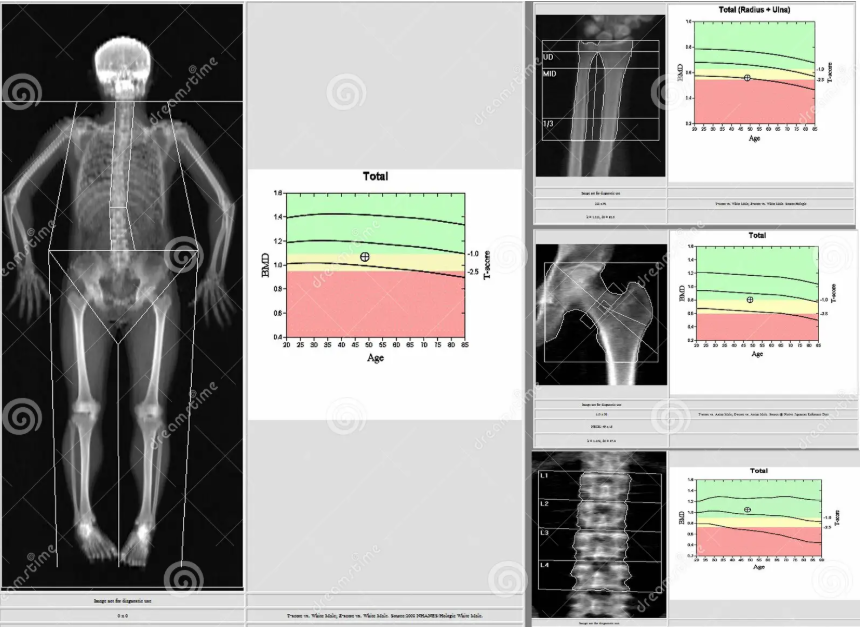
Most people are now aware of the recommendations to ensure adequate protein intake and to do resistance exercise while losing weight to preserve skeletal muscle mass appropriately. But, what about bone strength and bone mass? What is common practice about preventing bone loss and the increase in risk of fragility fractures that is a risk of aging, weight loss, and GLP1 medication use? Bone density peaks at age 30 and decreases from there, so it is not just an issue for seniors.
Normal weight obesity is particularly a risk factor for falls and bone fractures. Normal weight obesity is when someone has low bone mass or low grip strength. It is known that a high BMI protects against bone fragility fractures and a low BMI is a risk factor for bone fragility fractures. The concept of body composition is often discussed in the context of how much of a person’s BMI is skeletal muscle, but we need to be talking more about how much of it is bone and the health of that bone. In this article in the Obesity Journal, they looked at people with a normal BMI but low skeletal muscle mass in the appendages (arms and legs) and low grip strength. Appendage muscle is what is important because that is the part that helps people move and reflects use, as opposed to trunk muscle, which is more reflective of excess weight in the trunk which is not protective. They found that the risk of falls and bone fractures was much higher in this group compared to people without low muscle mass or grip strength or people with a high BMI. The take home message is that if you have a normal BMI, but low muscle or grip strength, you have a high risk of falls or bone fracture.
But, this just looks at the risk of sarcopenia and low grip strength, but what about GLP1s? Do the drugs themselves cause harm to the bones directly? The short answer is that we probably do not know yet, and more research is certainly needed, but preliminarily, it may not be the GLP1s themselves, but from downstream effects including micronutrient deficiencies, nutritional deficiencies, loss of muscle mass and reduced strain on bones from weight loss and loss of use itself. How can we reduce the risk of bone loss, falls and fragility fractures while still using GLP1s for all their beneficial effects? Consuming a well formulated diet that is dense in the nutrients you need while still being lower in calories, ensuring adequate micronutrients, exploiting resistance exercise while avoiding injury and still doing aerobic exercise, avoiding dosing that is too high and weight loss that is too fast, are all likely to help. As always, monitoring body composition is crucial. As a physician in obesity medicine, I look at blood work including vitamin D, parathyroid hormone, and calcium and thyroid levels as well as other medications people take or do not take that affect bone density. I also look at other medical conditions such as kidney failure or rheumatoid arthritis, hormone levels such as estrogen and testosterone, and ensure guidelines are followed regarding bone density testing and treatment guidelines if fracture risk is elevated. There are other risk factors for bone loss, some of them modificable and some of them not. Modifiable risk factors include things like alcohol, caffeine or tobacco use. Non modifiable risk factors include things like ethnicity and family history.
We are making great strides in weight management.. Our skeletons are dynamic, constantly undergoing remodelling with a balance or lack thereof in the breakdown and rebuilding of bone. Let’s be sure we include the component of bone in the equation of skeletal muscle of the appendages or trunk, adipose that is visceral or subcutaneous, and blood work that equals our metabolic health and vitality!
Take Back Your Bone Strength!
Valerie Hope-Slocum Sutherland, MD
Diplomate, American Board of Internal Medicine, 2005
Diplomate, American Board of Obesity Medicine, 2016
*Artificial Intelligence was not used in this article.
References:
Scott, D., Johansson, J., Ebeling, P.R., Nordstrom, P. and Nordstrom, A. (2020), Adiposity Without Obesity: Associations with Osteoporosis, Sarcopenia, and Falls in the Healthy Ageing Initiative Cohort Study. Obesity, 28: 2232-2241. https://doi.org/10.1002/oby.22984
Karam L, Mabilleau G, Paccou J. Effects of Glucagon-Like Peptide-1 receptor agonists on bone health in people living with obesity. Osteoporos Int. 2025 Nov;36(11):2115-2126. doi: 10.1007/s00198-025-07664-1. Epub 2025 Sep 8. PMID: 40920189; PMCID: PMC12628458.

Comments