
Body Composition on GLPs: Pros and Cons

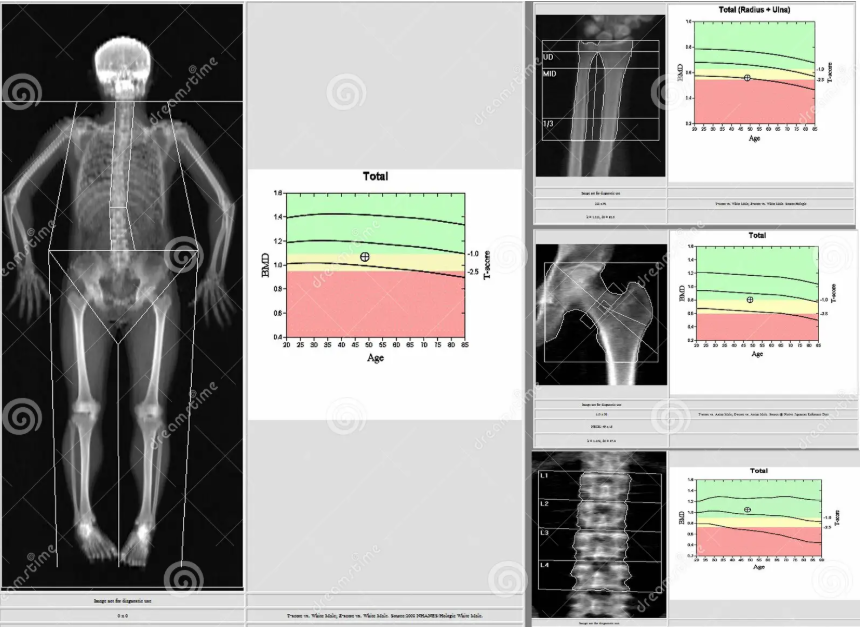
Wegovy was FDA approved in 2021 and Zepbound was FDA approved in 2023. As more people are on these medications for longer and the magnitude of weight loss for some is similar to that achieved with bariatric surgery (30-35% of starting body weight), it is important to pay close attention to the health of lean body mass. Important subgroups of lean body mass include skeletal muscle, bone, and subcutaneous adipose (fat) tissue). Let’s look more closely at what can happen, how to watch for it and how to prevent it.
Weight loss is a “catabolic” event. This means the body’s metabolism is breaking down its own tissue for energy because energy intake is less than what is required for daily function (calorie deficit). The goal is that the body will break down excess fat, especially excess visceral fat, and end with a healthier composition, quality, function and distribution of skeletal muscle, subcutaneous fat, and bone. In the past, it was very rare for a person to lose 100% of their excess body weight without bariatric surgery. However, these medications can be so effective that people are not only losing all their excess weight, they are losing more than excess fat, muscle, and then possibly bone.
Subcutaneous Fat
Subcutaneous fat is under the skin, outside the abdominal cavity, and is an inactive storage for energy. Subcutaneous fat in normal amounts is not a source of inflammation or insulin resistance, does not secrete harmful adipokines, and serves important physiologic and protective functions in the body. Normal body fat percentage is about 25-31% for typical females and 18-24% for typical healthy male. These may be lower for athletes in training. However, there is an important caveat that since it is a percentage, if muscle mass goes down, body fat percentage can look high when the actual fat in pounds is normal or even low. Especially with GLP 1 medications, oftentimes the muscle goes down significantly, so it can look like a person needs to lose fat when really they need to gain muscle. This is whyreferring to a reliable body composition analysis during weight management rather than a body fat percentage is crucial. The treatment is entirely different depending on the pattern. Losing too much subcutaneous or essential fat has potential health risks and does not have health benefits. The typical situations I can think of causing this before GLP 1 medications were food scarcity (famine) or anorexia nervosa. We can all appreciate the health risks of these situations.
Visceral Fat
Visceral fat is in the viscera, or solid organs. Excess visceral fat can lead to chronic inflammation, insulin resistance, and liver and pancreas dysfunction. Insulin resistance can lead to Type 2 Diabetes and cardiovascular disease. Fatty liver disease can lead to liver cirrhosis and liver cancer. There is more and more evidence that “fatty pancreas” can lead to pancreas dysfunction and possibly increased risk of pancreatic cancer. Reducing excess visceral fat is a primary treatment goal of using GLP 1 medications, but it is not measured directly on a simple scale or measurement of total body weight or BMI. While there is a correlation, there are significant and not uncommon cases in which visceral fat is under or over estimated using a BMI, or when weight is decreasing but visceral fat is not the primary driver of this. Also, losing weight does not always mean one is losing visceral fat, especially when metabolic dysfunction is already present.
Skeletal Muscle Mass
Studies show that the weight lost using GLP 1 medications is typically about 15-40%, with an average closer to 20-30%. It is important to note that this is not significantly different from the proportions seen with weight loss from other means. So, why does it seem to be more of an issue? My theory is that it is more of an issue because of the amount of weight people are losing and the amount of time they are staying on GLP 1 medications (which is the intention, because otherwise the weight tends to come back). With prior weight loss methods other than bariatric surgery, a typical weight loss would be around 10-15%, so if 20-30% of that was muscle, there was not such a high risk of ending with relatively low muscle as there is if people are losing 30-35% of their starting body weight. There has not been a treatment before that was non surgical in which people lost nearly all of their excess body weight. Also, with GLP 1 medications, the primary mechanism of weight loss is reduced calorie intake. Oftentimes, significant exercise is not required for weight loss, which is also unique compared to prior non surgical weight loss (unless you look at protein sparing modified fasts which use medical nutrition therapy). With GLP 1 medications, people do not consistently have to follow a specific nutrition content to have weight loss, although it is recommended, along with exercise. Moreover, as people stay on GLP 1s now for 2-3 years or more at their goal weight, muscle loss is common with aging. There are many common barriers to regular exercise (environment, injuries, access, time, cost, other medical conditions). It is important to continue nutrition, exercise, and body composition monitoring over time even when weight is stable. Muscle can go down and fat can go up and the scale does not change.
Cardiorespiratory Fitness
Cardiorespiratory fitness is a measure of how healthy the heart is at delivering oxygen to the muscles and the muscles using that oxygen. It is a crucial measure of health and cardiology groups have called for it to be measured as part of an annual preventive exam. It does not show up on BMI or blood work and yet is crucial for longevity and lowering the risk of cardiovascular events. Many people are using GLP 1 medications to improve health, and it is important to note that they do not improve cardiorespiratory fitness directly. Of course, the goal is that weight loss may remove barriers to exercise for some, if present, that then may allow increasing exercise which would then improve fitness, but this is a lot of assumptions. A common misconception that people experience frequently as part of weight bias is that if someone has a higher BMI, they must not be physically fit, and at a normal or lower BMI, they must have higher fitness. However, studies show that physical fitness is not inversely proportionate to BMI, but rather it is directly proportionate to lean body mass. In other words, the more lean body mass a person has, the higher their fitness level, in general. This often means that a person with a BMI over 40 has higher fitness than a person with normal weight obesity, in which the BMI is normal but lean body mass is low. How can you take care of your physical fitness? You can obtain a surrogate indication by resting heart rate and heart rate variability. There are also simple tests such as a step test, but do not perform these at home- check with your doctor or provider before to make sure it is safe! Wearable watches now are also a great option. They gather data on your heart rate as you do things like walk and exercise and estimate a VO2 max which is the measurement of cardiorespiratory fitness. The wearables will tell you where yours is relative to similar groups of people and give recommendations for improving it and oftentimes the apps with the wearables will design target heart rate programs that start where you are and progress at a reasonable pace. As noted, check with your physician or provider before increasing or starting exercise.
Big Picture
Overall, it is important to balance the benefits and potential risks of GLP 1 medications (just like any prescription). The benefits to body composition are to reduce excess visceral fat, excess subcutaneous fat, and even excess skeletal muscle in the trunk and upper body typically (weight distribution). These benefits do not touch on the metabolic benefits such as reduced insulin resistance, inflammation and others that are not on the FDA approved label and are undergoing research. Potential risks to body composition are excess loss of skeletal muscle, essential or subcutaneous fat or nutrient deficiencies. Another potential theoretical risk is assuming that at a normal BMI, that has sufficiently reduced excess cardiovascular risk without additionally addressing things like physical fitness, LDL, and blood pressure.
The good news is, all of these potential risks are predictable, preventable, measurable, and typically treatable. There are clear patterns to recognize, if you are looking. So, use these powerful tools wisely, and they are prescription because they are intended to be used under the prescription of a licensed medical provider with an established physician/provider relationship with you as an individual.
Take Back Your Muscle and Fitness,
Valerie Hope-Slocum Sutherland, MD
**Artificial Intelligence was not used to write this blog. The thoughts and opinions are solely those of the author based on education, training, reading, listening, observing, practice and experience (for better or worse!).
Comments